Low Current Systems (ELV Systems) have become an essential component of any modern project, whether it is a residential building, commercial complex, hospital, or government facility. They are not limited to providing security or enhancing communications; they also form a fundamental part of the infrastructure that smart buildings rely on to efficiently manage their daily operations.
As reliance on advanced technologies continues to grow, implementing these systems now requires much more than simply installing devices and laying cables. True success begins with proper planning, followed by engineering design and coordination with different engineering disciplines, and concludes with commissioning and final handover. Any issue during one of these stages may lead to operational problems or additional costs that could have been avoided.
In this guide, we review the stages of implementing low current systems in large-scale projects, while highlighting the key factors that ensure professional execution, maximum efficiency, and long-term reliability.
Stages of Low Current Systems Implementation
Stage One: Project Requirements Study (Concept & Requirements)
Every project is unique; therefore, there is no single solution that fits all buildings. For this reason, the implementation process begins with a detailed assessment of the project's requirements to determine the systems that best meet the client's needs while aligning with the nature of the facility.
During this stage, the engineering team analyses several aspects, including:
- Building usage.
- Expected number of users.
- Required level of security.
- Systems required for the project.
- Future scalability.
- Compliance with applicable codes and regulatory requirements.
The time invested in this stage directly reflects on the quality of implementation later and helps minimize modifications that may arise during project execution.

Stage Two: Engineering Design & Shop Drawings
After defining the project requirements, the engineering team prepares the shop drawings, which serve as the primary reference for all site teams.
These drawings include device locations, cable routing, communication rooms, network racks, and Bills of Quantities (BOQ), which specify all required materials and equipment.
The objective of the design phase extends beyond determining installation locations. It also ensures ease of future maintenance and provides flexibility to integrate additional systems without the need for major reconstruction.
These designs are developed in accordance with international standards such as NFPA, IEC, TIA/EIA, and BICSI to ensure the highest levels of quality and safety.

Stage Three: Interdisciplinary Coordination
The successful implementation of low current systems depends heavily on effective coordination between all engineering disciplines involved in the project.
For example, cable routing may conflict with HVAC ducts or fire protection systems if not reviewed in advance, resulting in rework and project schedule delays.
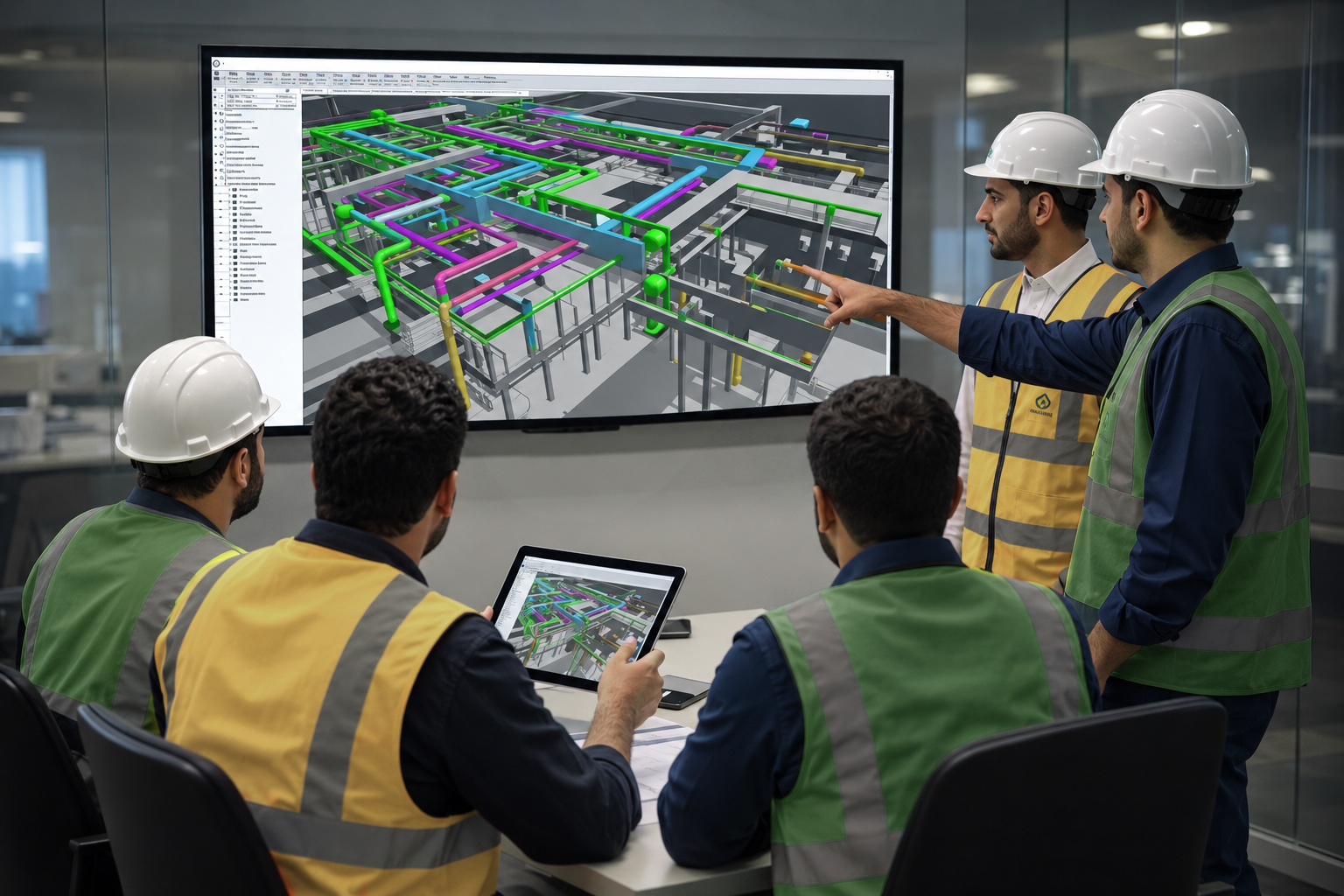
For this reason, modern projects rely on continuous coordination meetings in addition to Building Information Modeling (BIM), which helps detect clashes before actual construction begins, saving both time and cost while ensuring smooth project execution.
Stage Four: Infrastructure Installation
Before installing any devices, the infrastructure that will support all system components must first be prepared.
This stage includes:
- Installing conduits.
- Installing cable trays.
- Installing metal cable trays and supports.
- Preparing junction boxes.
- Preparing communication rooms.
- Installing network racks.
Paying close attention to this stage not only improves the quality of the current installation but also simplifies future maintenance and system expansions while reducing potential issues.
Stage Five: Cable Pulling & Laying
Once the pathways have been prepared, cable pulling and system interconnections begin. Although this step may appear straightforward, it requires strict adherence to several technical guidelines to ensure network stability and reliable data transmission.
The most important practices include:
- Separating low current cables from power cables to minimize electromagnetic interference (EMI).
- Maintaining the minimum bend radius recommended by the manufacturer.
- Labeling and documenting all cables clearly.
- Securing cables properly to protect them during operation.
- Performing preliminary testing before closing ceilings or walls.
Following these practices minimizes future failures while making maintenance and troubleshooting faster and more efficient.
Stage Six: Equipment Installation
After completing cable installation and confirming that the infrastructure is fully prepared, the installation of low current system devices begins according to the approved shop drawings. At this stage, the engineering designs are transformed into a fully-functional system within the building.
The installation includes a wide range of equipment, such as:
- CCTV cameras.
- Access Control devices.
- Fire detectors and fire alarm control panels.
- Public Address speakers and audio systems.
- Network outlets and communication points.
- Network devices such as switches and routers.
- Intercom and internal communication devices.
The success of this stage depends not only on mounting the equipment in the correct locations but also on following the manufacturers' installation guidelines, setting the correct installation heights and viewing angles, and ensuring that all devices remain easily accessible for future maintenance or replacement.

Stage Seven: System Integration
Once all devices have been installed, the next stage ensures that all systems operate together as one integrated system: System Integration.
In modern buildings, CCTV, fire alarm, and access control systems no longer operate independently. Instead, they exchange data with one another to provide more efficient building management.
- Configuring user permissions.
- Programming access control devices.
- Integrating CCTV cameras with management platforms.
- Integrating the fire alarm system with door control systems and public address systems.
- Connecting all systems to the Building Management System (BMS).
- Configuring smart alerts and notifications.
This level of integration enables facility management teams to monitor all building systems through a single platform, improving incident response times and accelerating operational decision making.
Stage Eight: Commissioning & Testing
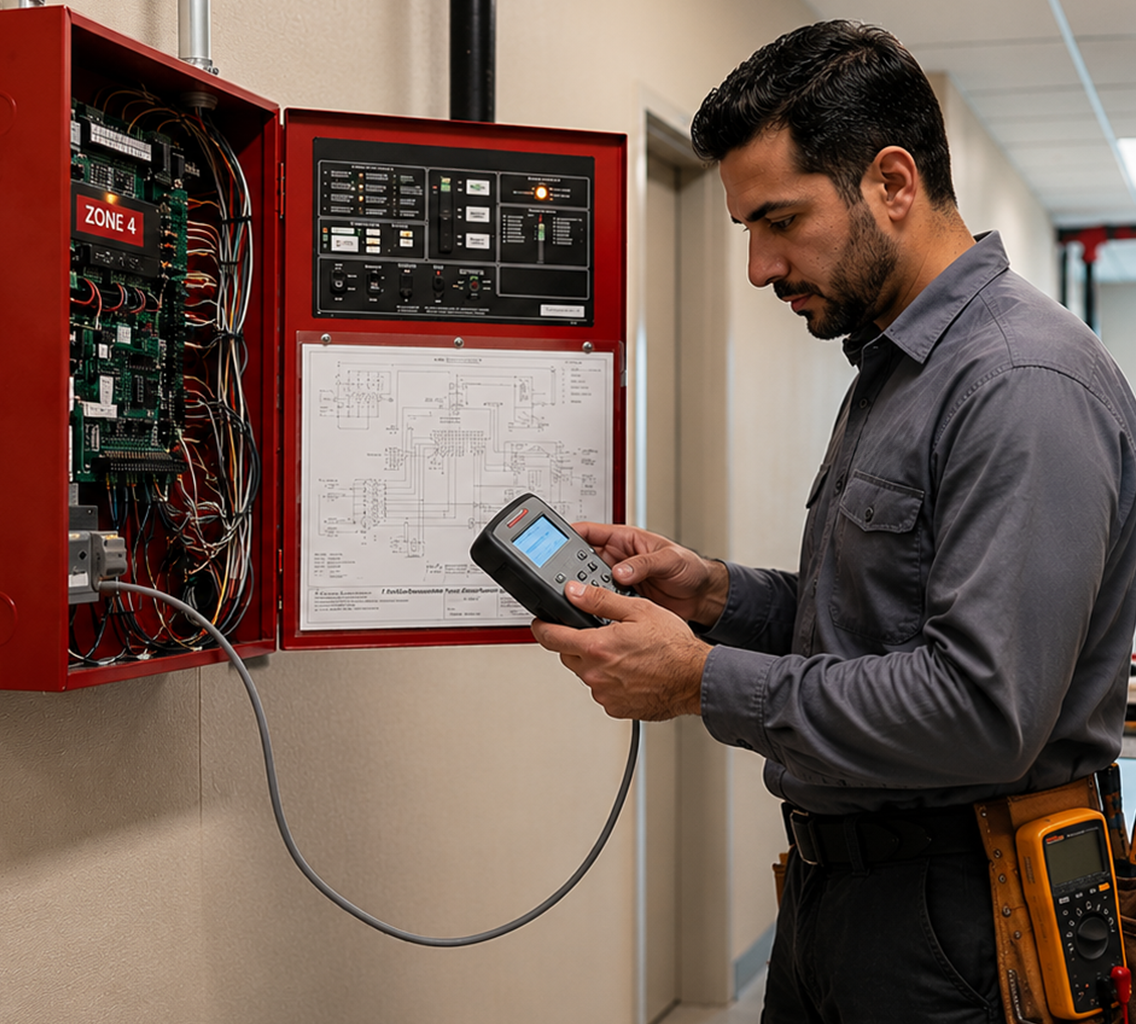
Before the project is declared ready, all systems must be verified to ensure they operate exactly as designed. This stage involves a series of on-site tests to confirm that every system functions reliably and that all components work together seamlessly.
Among the most important tests performed are:
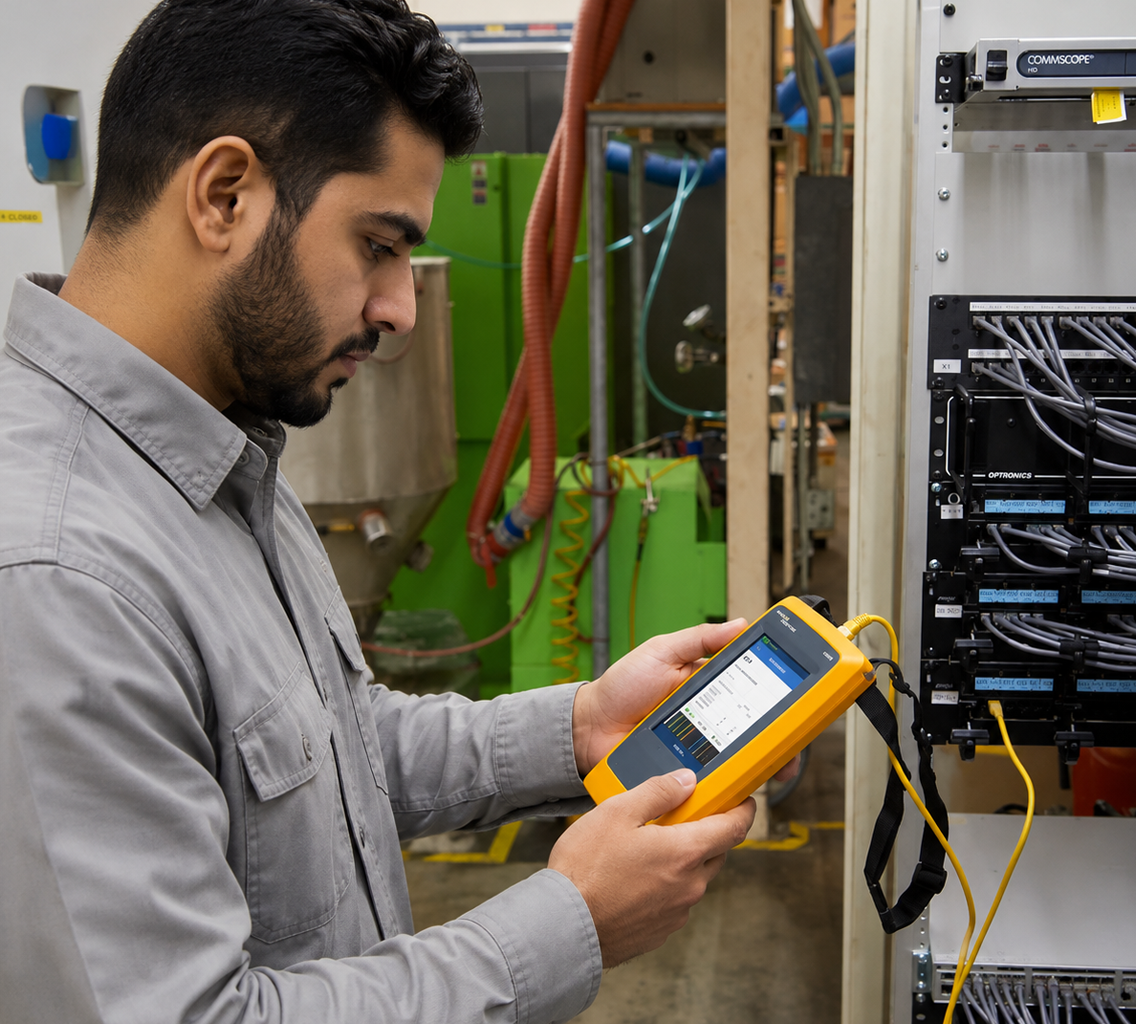
- Network point testing using Fluke Testing devices.
- Verifying the quality of CCTV camera feeds and recording.
- Testing Access Control systems.
- Testing Fire Alarm systems and emergency response.
- Testing Public Address and Voice Evacuation systems.
- Simulating emergency scenarios to verify the integration of all systems.
This stage is not limited to identifying faults; it also ensures that all systems comply with the technical specifications before the project is officially handed over to the owner.
Stage Nine: Final Handover & Documentation
Once all testing has been completed, the project proceeds to the final handover stage, which officially marks the completion of all implementation works.
A standard handover package typically includes:
- As-Built Drawings reflecting the final installed condition after project completion.
- Operation & Maintenance Manuals (O&M Manuals).
- Equipment and system test reports.
- Warranty certificates for all equipment and systems.
- Training for the owner's operations team on the proper use and management of the systems.
Having these documents simplifies future maintenance activities and supports future maintenance, expansions, or system upgrades without the need to reassess the project from the beginning.